Strategy Sold $284 Million of MSTR. Most Went to STRC Buybacks.
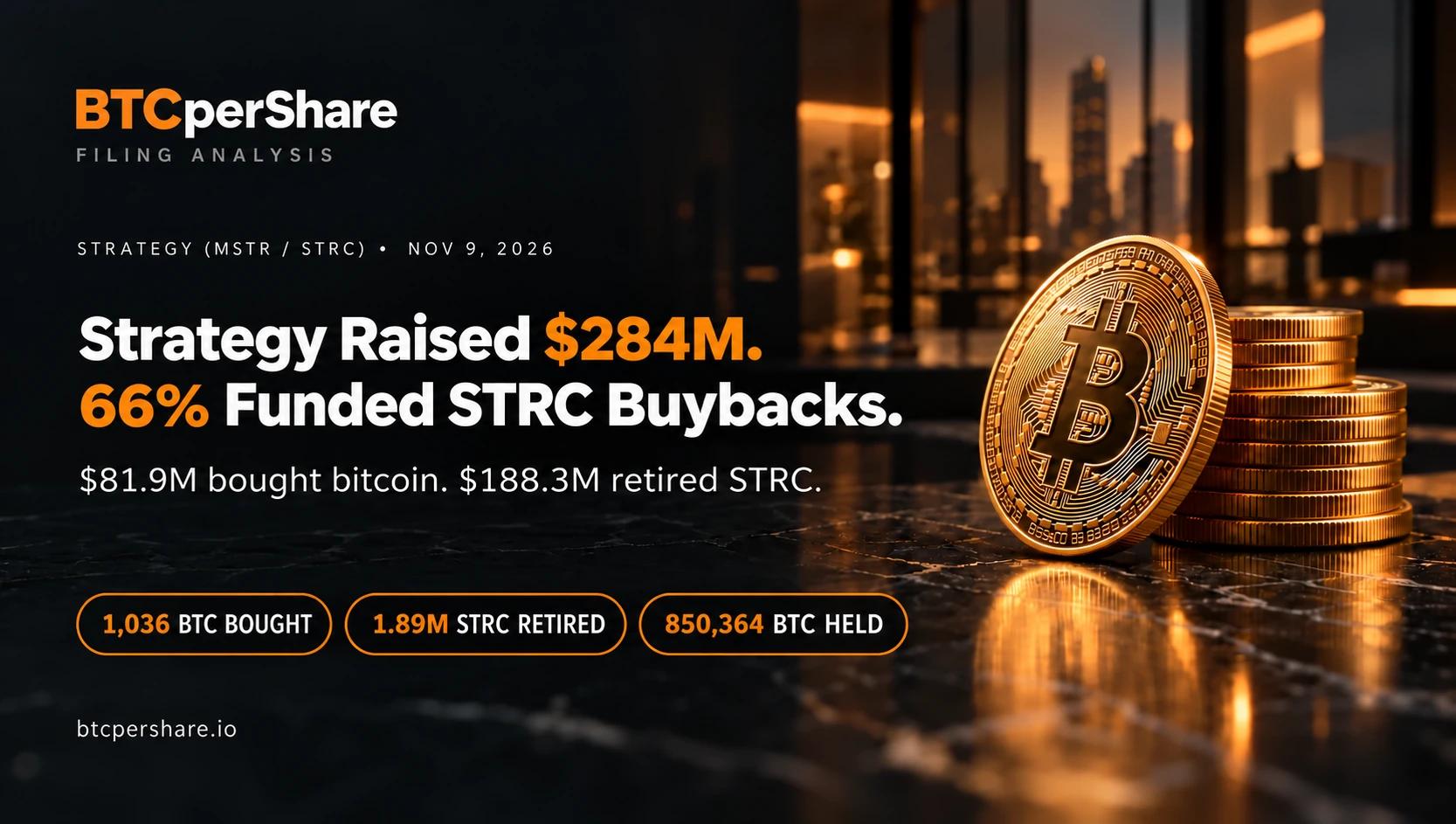
Strategy raised $283.8 million selling MSTR last week. About two-thirds went straight into STRC buybacks, while less than a third bought bitcoin. The company added 1,036 BTC, but its common share count grew faster than its treasury. Gross bitcoin backing per assumed diluted share fell 0.33%.
The benefit was a smaller preferred dividend bill. The cost was more common shares sharing the bitcoin. Both belong in the assessment of this week's filing.
Common shareholders funded both sides
The November 9 8-K reports 2,051,348 MSTR shares sold through the at-the-market program. Here is where the money went:
| Use of MSTR proceeds | Amount | Share |
|---|---|---|
| STRC repurchases | $188.3 million | 66% |
| Bitcoin purchases | $81.9 million | 29% |
| USD Cash | $13.6 million | 5% |
No preferred ATM sales were reported.
That funding mix matters. In last week's filing, Strategy allocated most of its common-stock proceeds to USD Cash and paid for STRC repurchases from that cash account. This week, it explicitly identified new MSTR proceeds as the source of the entire STRC buyback.
Strategy is continuing to provide liquidity to STRC holders near $100. Common shareholders are supplying the capital to do it.
More bitcoin, less backing per share
Strategy paid an average of $79,012 for the 1,036 BTC purchased. Reported holdings ended at 850,364 BTC.
Using the company's disclosed assumed diluted shares outstanding, or ADSO:
| Measure | November 1 | November 8 |
|---|---|---|
| Bitcoin held | 849,327 BTC | 850,364 BTC |
| ADSO | 453.112 million | 455.163 million |
| Gross sats per ADSO share | 187,443 | 186,826 |
Holdings grew approximately 0.12%, while ADSO grew 0.45%. For someone holding 100 MSTR shares throughout the week, gross bitcoin backing fell by about 61,680 sats.
The buyback allocation explains much of that decline, but there is another constraint. At the reported bitcoin purchase price, putting all $283.8 million into bitcoin would have bought roughly 3,592 BTC. Strategy needed approximately 3,844 additional BTC to keep gross backing flat across the larger ADSO count. Even that hypothetical would have fallen slightly short.
These calculations use reported holdings and the issuer's ADSO methodology. Holdings rose by 1,037 BTC despite reported purchases of 1,036; the filing does not explain the one-BTC difference. The accretion calculator lets readers test the funding and share-count assumptions.
What the STRC buybacks accomplish
Strategy repurchased 1,887,464 STRC shares for $188.3 million, or roughly $99.76 each. Against their $100 stated amount, the discount was only about $446,000.
The larger benefit is recurring. At STRC's current 12% variable dividend rate, those shares represented approximately $22.6 million in annualized dividends. Retiring them removes that payment burden at today's rate; the savings would differ if the rate changed.
Outstanding STRC is now approximately 79.935 million shares, representing $7.993 billion of stated preferred claims. Its annualized dividend bill at 12% falls to roughly $959.2 million. The STRC page tracks the rate and repurchase history.
Preferred claims and future cash demands are shrinking. Gross BTC/share does not capture those benefits, which is why the decline in that metric alone cannot settle whether the overall capital decision creates value.
Strategy also reported $146.2 million in USD Cash and a separate $4.77 billion USD Reserve after using $21.1 million of the reserve for preferred dividends. Another $560.3 million remains authorized for preferred repurchases; that is permission to buy, not cash already committed.
Our verdict
Dilutive on gross BTC/share, with a lower preferred dividend burden.
Replacing STRC with common equity reduces ongoing cash demands, but existing MSTR holders now share the treasury with more common shares. The immediate benefit is relief from preferred claims and dividends; the immediate cost is lower bitcoin backing per share.
The next meaningful improvement would be sustained demand that lets Strategy issue STRC near par and fund bitcoin purchases without expanding the common share count. This filing still shows Strategy buying back STRC, with MSTR holders financing the transaction.