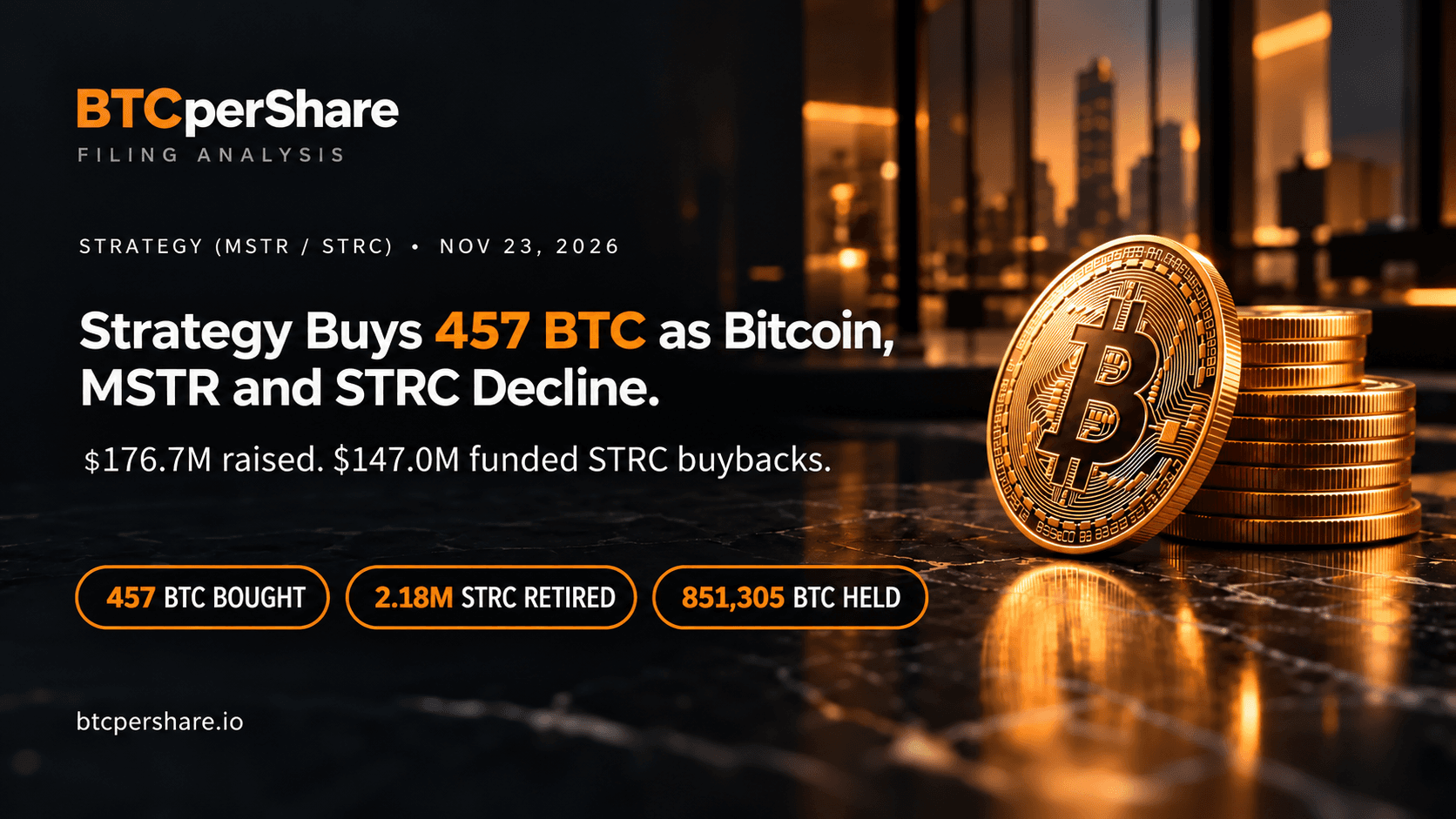
Strategy Buys 457 BTC as Bitcoin, MSTR and STRC Decline
Bitcoin briefly fell below $56,000 over the weekend before recovering above $61,000. MSTR closed Friday at $77.80, while STRC fell to $93.60.
The declines create competing pressures for Strategy: cheaper Bitcoin, more expensive common-share dilution, and an opportunity to retire preferred obligations at a deeper discount.
More Bitcoin, less Bitcoin per share
Strategy's November 23 8-K reports 457 BTC purchased for $29.6 million, bringing holdings to 851,305 BTC.
The company also sold 1.93 million MSTR shares, raising $176.7 million. Approximately $147 million of those proceeds funded STRC repurchases rather than Bitcoin purchases.
As a result, gross Bitcoin backing declined from 186,082 to 185,392 sats per assumed diluted share, down 0.371%, based on Strategy's holdings and ADSO ledger.
At Bitcoin around $61,000, each diluted MSTR share represents approximately $113 of gross Bitcoin backing, compared with Friday's $77.80 stock price. That excludes debt, preferred claims and cash, but illustrates why issuing MSTR at depressed prices is problematic for BTC/share growth.
STRC's decline creates opportunity
Strategy repurchased 2.18 million STRC shares for $211.8 million, averaging $96.99 per share.
Those purchases retired $218.4 million in preferred claims and eliminated approximately $26.2 million in annualized dividends at the current 12% rate.
With STRC now at $93.60, repurchases become even more attractive. Every dollar spent can retire more preferred claims and eliminate more future dividends.
Strategy also expanded its preferred repurchase authorization to $4 billion, with $1.12 billion remaining.
The question is how it funds those buybacks.
Using existing cash to retire discounted STRC reduces preferred obligations without common-share dilution. Issuing MSTR to fund those repurchases delivers the same preferred-liability relief, but spreads Strategy's Bitcoin holdings across more common shares.
That's the central trade-off in this filing. STRC's decline creates an increasingly attractive buyback opportunity, but MSTR's decline makes funding it through common equity increasingly costly to existing shareholders.